Powering Your Success

FRCAMCQ

Highlight

Practice FREE Primary and Final FRCA!

About our company and mission

Our team helping clients succeed

About Us

Learn. Practice. Master.

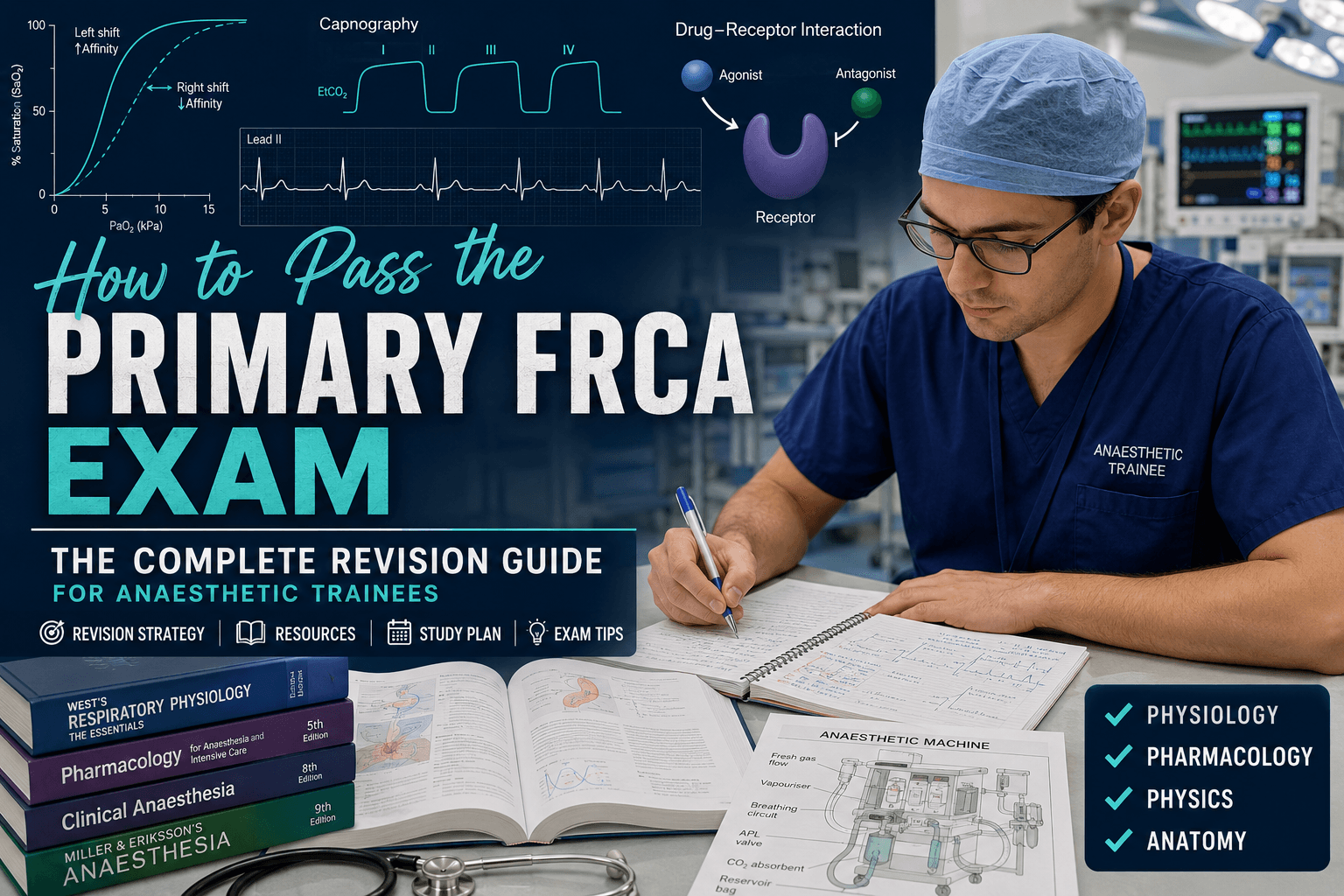
FRCAMCQ is a dedicated question-based revision platform for anaesthetic trainees preparing for the written MCQ and SBA components of the FRCA examinations.

Our aim is simple: to help candidates build exam confidence through realistic, clinically relevant questions with clear explanations and structured learning points.

Questions are designed to support both Primary and Final FRCA preparation, with content mapped to the core knowledge required in UK anaesthetic training.

🚀Start Your Free Trial
No credit card requiredUnlimited revisionsPrepare anytime

"Join 1,000+ satisfied users who transformed their skills"

Question Bank

Practice smarter with 701+ exam-ready questions

Curated across a wide range of topics and subtopics — with detailed explanations, difficulty filters, and instant performance feedback so you know exactly where to focus.

6+

Topics

57+

Subtopics

49+

Tests

701+

Questions

Filter by topic & difficulty

Target weak areas with precision using granular topic and difficulty filters.

Track your progress

Visual dashboards show your accuracy trends and topic-wise improvement over time.

Detailed explanations

Every question includes a step-by-step explanation written by subject experts.

Timed mock tests

Simulate real exam conditions with auto-scoring and performance breakdowns.

Bookmark & revisit

Save tricky questions for focused revision before your exam day.

Practice on any device

Fully responsive — study on desktop, tablet, or phone without losing your progress.

No credit card neededFree trailDetailed explanationsExpert-verified answers
Insights & Learning

Built for Anaesthetic Trainees

FRCAMCQ helps candidates move beyond memorisation by applying core anaesthetic knowledge to exam-style clinical scenarios.

Interactive learning insights dashboard showing quiz analytics

Ready to level up your exam preparation?

Practice smarter with real-exam questions, detailed explanations, and progress tracking trusted by thousands.

🚀Start Free Trial
No credit card required Unlimited practice attempts Personalized learning path Secure & trusted platform

Plans & Pricing

Simple, transparent pricing that grows with you.

£2

£1 off

£1

Monthly

Free Question Bank
Get Started

No credit card required


Beta Version Under Construction
Monthly Validity Plan
Full Access to All Tests
Advanced Analytics
FAQs

Frequently Asked Questions

Everything you need to know before getting started with us.

The Primary FRCA examination set by the Royal College of Anaesthetists (RCoA) consists of three distinct components: a written paper followed by two clinical examinations. The Multiple Choice Question (MCQ) is a three-hour, computer-based exam featuring 90 Single Best Answer (SBA) questions with no negative marking. It tests basic sciences, divided equally into 30 questions each for Pharmacology, Physiology and Biochemistry, and Physics, Clinical Measurement, Equipment, and Statistics. Candidates must pass this written component before moving on to the practical assessments; a pass remains valid for three years. The clinical components comprise the Objective Structured Clinical Examination (OSCE) and the Structured Oral Examination (SOE), both sat in person during the same examination week. The OSCE features a circuit of up to 16 assessed five-minute stations evaluating practical skills, resuscitation, applied anatomy, communication, and data interpretation. The SOE consists of two 30-minute viva sessions testing basic sciences, clinical scenarios, critical incidents, and equipment safety. Both clinical parts are marked independently. If you pass one and fail the other, you retain credit for the passed section and only need to resit the failed component. Candidates are permitted up to six attempts per section.
There are 90 questions in the Primary FRCA MCQ exam. All of them are Single Best Answer (SBA) questions, split evenly into: - 30 questions in Pharmacology - 30 questions in Physiology (including related anatomy and biochemistry) - 30 questions in Physics, clinical measurement, equipment, and statistics/data interpretation
A pass in the Primary MCQ remains valid for three years towards sitting the clinical components (OSCE and SOE). Once you have passed all parts of the Primary, the overall qualification is valid for seven years towards the Final FRCA.
The Royal College of Anaesthetists recommends a combination of structured reading and extensive question practice. Candidates are encouraged to complete hundreds of SBA questions, use mock examinations, practise SOE techniques under timed conditions, and attend OSCE practice sessions where possible. The College advises beginning revision at least three to four months before each examination component.
No. Candidates must first pass the Primary FRCA examination, or hold a recognised exemption, before being eligible to apply for the Final FRCA examination. The Final FRCA itself consists of a written examination followed by the Structured Oral Examination (SOE), and candidates must pass the written component before progressing to the oral examination. For official examination regulations, curriculum blueprints, examination dates and candidate guidance, refer to the Royal College of Anaesthetists FRCA Examinations and the Primary FRCA Examination Page.
No. Since September 2023, the Primary MCQ consists entirely of 90 Single Best Answer (SBA) questions.
The written paper is delivered online as a remotely invigilated, computer-based exam. You sit it on your own laptop or computer using the College’s designated testing software, with strict identity checks and environment monitoring.
With 90 questions over three hours (180 minutes), you have roughly two minutes per question, leaving time for review.
No. One mark is awarded for each correct answer. Candidates are advised to select an answer for every single question, as unattempted questions simply score zero.
There is no fixed percentage or static score. The pass mark changes each sitting and is determined using standard-setting methods (such as the modified Angoff method) adjusted for exam difficulty and the Standard Error of Measurement (SEM). Historically, the pass mark usually sits around the 65% to 75% range.
Under RCoA examination regulations, candidates are allowed a maximum of six attempts at each component of the exam.
You must hold full registration with the GMC (or equivalent national regulatory medical body) and be registered with the Royal College of Anaesthetists, either as a UK trainee in a recognised training programme (Core / ACCS / Stage 1) or as an eligible affiliate/trust grade member under College regulations.
Most trainees attempt the MCQ during their CT1/CT2 (Stage 1) years, usually after completing around 6 to 12 months in anaesthesia. Clinical familiarity makes the pharmacology, equipment, and physiology far more intuitive.
The Primary MCQ is typically held three times a year: usually around September, November, and February.
All of our questions are mapped directly to the RCoA Stage 1 curriculum domains: Pharmacology, Physiology (including Anatomy and Biochemistry), and Physics, Clinical Measurement, and Statistics.
Yes. You can test your recall through untimed subject-by-subject practice, or simulate the actual sitting using full-length, 90-question timed mocks under real 3-hour exam conditions.
No. The College has confirmed that the underlying syllabus and standard-setting principles remain identical. All questions and scenarios will still map directly to Stage 1 of the UK anaesthetic curriculum (Pharmacology, Physiology, Physics, Clinical Measurement, and Equipment). The shift only changes how knowledge and reasoning are assessed.
Yes, completely. Because the written paper remains an SBA assessment testing the same Stage 1 syllabus, revising with SBA question banks directly prepares you for both the current MCQ and the new Primary AKT.
The College has outlined a phased rollout: - Until June 2027: The current exam structure (MCQ, OSCE, SOE) runs as standard. - July 2027 to June 2028 (Transition Year): First-time entrants sit the new format (AKT and CASE). Candidates with partial passes in the legacy format (e.g. passed OSCE but not SOE) can sit their remaining component during this year, or opt into the new CASE exam. - From July 2028: The legacy OSCE and SOE are retired permanently, and all candidates sit the AKT and CASE.
A pass in the written exam will continue to hold its standard validity period (three years) towards entering the clinical component, allowing you to book either the remaining legacy clinical sittings during the transition year or the new CASE exam
Yes. Under the College’s transition guidance, attempts at the new CASE exam are counted separately from previous attempts at the legacy OSCE or SOE, provided you have not already exhausted the maximum six-attempt rule on the legacy component before the transition.

Explore Our Specialized Platforms

Discover our curated collection of expert platforms, each designed to help you excel in your professional journey.
Frcamcq exam preparation platform logo

Frcamcq

frcamcq.com

Master the FRCA MCQ Exam

Visit Frcamcq
Estudiamir exam preparation platform logo

Estudiamir

estudiamir.com

Practica con tests tipo MIR de Medicina en la Universidad Europea de Madrid. Mejora tu rendimiento con simulacros y preguntas clave para tus asignaturas.

Visit Estudiamir
Aclsmcq (US) exam preparation platform logo

Aclsmcq (US)

aclsmcq.com

Advanced Cardiac Life Support MCQs for the American Heart Association

Visit Aclsmcq (US)
SQEMCQ exam preparation platform logo

SQEMCQ

sqemcq.com

Prepare for the SQE with high-quality MCQ practice questions, mock exams and clear explanations. Designed for SQE1 candidates.

Visit SQEMCQ
Aktmla exam preparation platform logo

Aktmla

aktmla.com

AKT question bank for UK medical students and IMG taking the UK MLA and more. Expert-written SBA mocks, with NHS and NICE-based explanations. Free exams.

Visit Aktmla
Plabmcq exam preparation platform logo

Plabmcq

plabmcq.com

PLAB Test

Visit Plabmcq
Alsmcq (UK) exam preparation platform logo

Alsmcq (UK)

alsmcq.com

Master the ALS exam with realistic MCQs, detailed explanations and timed mock tests. Perfect for healthcare professionals preparing for Resuscitation Council UK

Visit Alsmcq (UK)
EDICMCQ exam preparation platform logo

EDICMCQ

edicmcq.com

Practice 700+ EDIC Exam Part 1 MCQs (Type A & Type K) with expert explanations, timed mock exams, and progress tracking. Start free — no credit card needed.
Visit EDICMCQ
ATLSMCQ exam preparation platform logo

ATLSMCQ

atlsmcq.com

Pass the ATLS written exam with 100+ realistic mocks, expert-written MCQs and explanations referenced to the 11th edition handbook. Start free.

Visit ATLSMCQ
MRCSMCQ exam preparation platform logo

MRCSMCQ

mrcsmcq.com

Royal College of Surgeons (MRCS) exam

Visit MRCSMCQ
Aptitude Tests UK exam preparation platform logo

Aptitude Tests UK

aptitudetestuk.com

Pass your UK Armed Forces aptitude test first time. Practice the real DAA format with timed mock exams, instant feedback and expert explanations for Navy, Army

Visit Aptitude Tests UK
Driving Test exam preparation platform logo

Driving Test

ukdrivingtestmcq.com

Practise DVSA-style UK driving theory test questions with realistic MCQs and mock exams. Track progress, build confidence, and pass first time.

Visit Driving Test
FICMexam exam preparation platform logo

FICMexam

ficmexam.com

Faculty of Intensive Care Medicine (FFICM) Final Exam

Visit FICMexam

Want to score higher and stay ahead?

Join thousands of learners practicing daily, competing on leaderboards, and improving their scores with smarter preparation.

FRCAMCQ