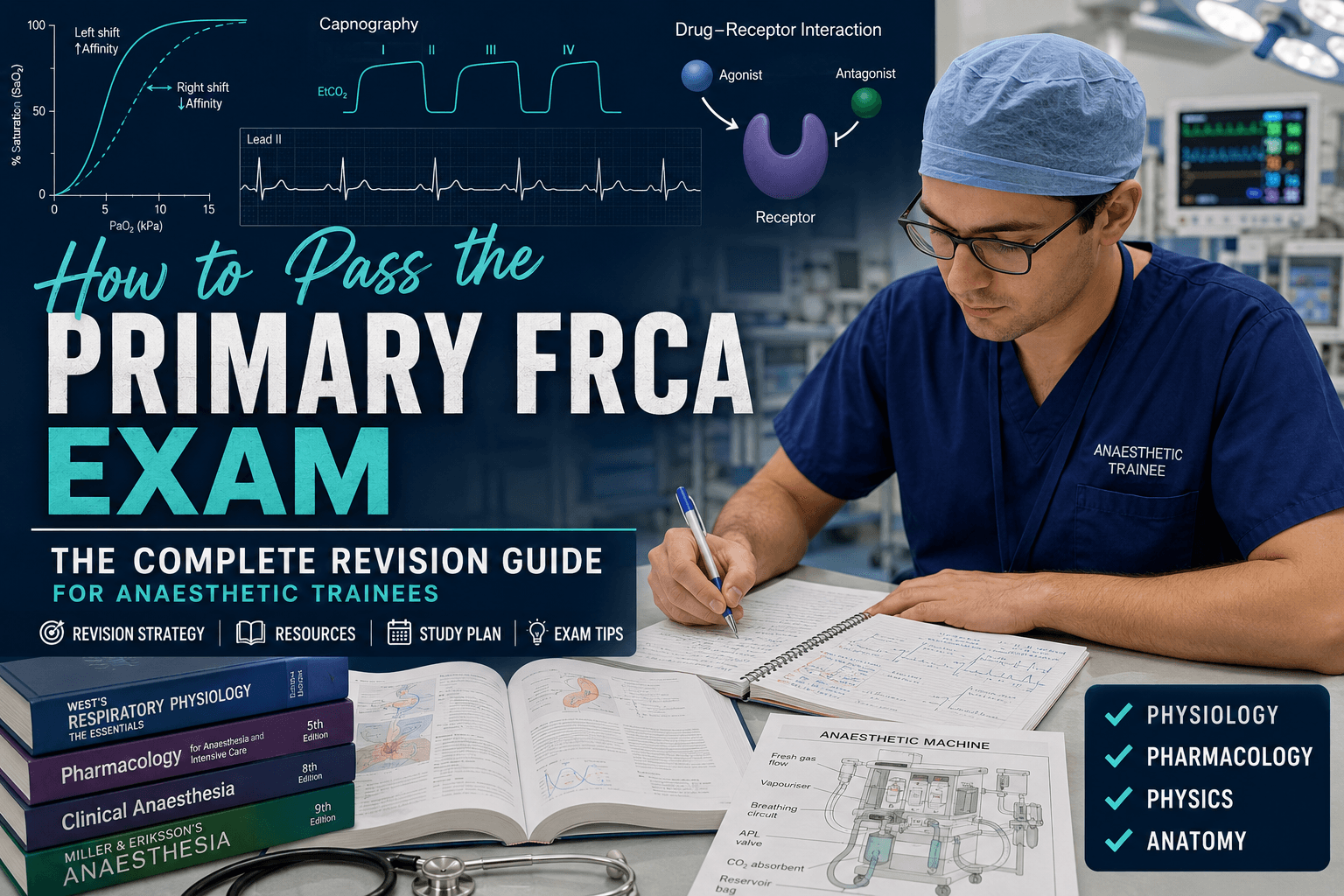
Every FRCA Primary candidate has experienced the same frustration. You read a question, narrow it down to two options, confidently choose one—and it's wrong. You review the explanation, realise why the correct answer is correct, and move on. A few weeks later, you encounter a similar question and make exactly the same mistake.
The problem isn't a lack of knowledge. It's a lack of understanding of how FRCA questions are written. Most question banks are excellent at telling you the correct answer. Very few explain why the examiner wrote the question in the first place, why the distractors seem so convincing, or what subtle clue in the clinical scenario should have guided you towards the correct answer. That's where FRCA MCQ is different.
This series is built on a simple idea: every SBA is more than just a question. Hidden within each clinical vignette is a core scientific principle that the examiner wants you to recognise. Whether it's tachyphylaxis versus tolerance, concentration effect versus second gas effect, or affinity versus efficacy, the real challenge is not recalling a fact—it's identifying the concept being tested. The aim is not simply to help you answer one question correctly, but to recognize the same pattern whenever it appears in a different context.
But passing the FRCA isn't the only goal. Every discussion will also connect the science to real clinical practice. You'll discover why repeated doses of ephedrine become ineffective during spinal anaesthesia, why glucagon works in β-blocker overdose, why heparin doesn't cross the placenta, or why remifentanil behaves so differently from fentanyl after prolonged infusions. These are not just examination facts—they are concepts that underpin safe anesthetic practice.
At FRCA MCQ, we believe that understanding always outlasts memorization. Facts fade, but concepts endure. If you can learn to think like an examiner, you'll not only perform better in the FRCA Primary—you'll become a more confident clinician.